
Clarke County Arrest Reports
Clarke County publishes no multi-day booking blotter. The Osceola Sentinel-Tribune Police Reports category is the strongest recurring source instead. Its periodic articles draw mainly on Osceola police reports. That focus makes them handy for events spanning several days. The coverage is neither countywide nor a live jail roster, though. One June 25, 2026 article went up at 6:30 a.m. It listed names, charges, and bond or release details. Some transports to the Clarke County Jail appeared too. The timestamp reflects when the paper posted the item. It does not mark when each event occurred. Expect newspaper branding rather than a booking-photo gallery.
A newspaper report can describe an event from days ago. Confirm present custody with the sheriff or Iowa VINE.
The Sentinel-Tribune Police Reports index shows the recurring local publication.

The category view helps you find dated articles, but it does not claim to list every Clarke County booking.
Read Clarke Reports by Date
Keep three dates separate when working backward through the archive. That habit prevents reading a fresh article as proof of fresh custody.
- Open the Police Reports category and identify the article publication date.
- Read the item for each underlying incident or arrest date, which may differ from the headline date.
- Note the named agency. Osceola Police coverage does not guarantee inclusion of sheriff, state patrol, Murray, or Woodburn events.
- Record any explicit transport, bond, citation, or release statement without extending it beyond the article’s words.
- Use the sheriff or VINE for present custody and Iowa Courts Online for the filed case and disposition.
The Arrested Today page is the faster official-first route. Use it when the question is present custody, not past reporting.
Fields in Clarke Arrest Reports
Newspaper entries support some fields but not all. Treat each one as a secondary summary of the underlying record.
| Item | How to interpret it |
|---|---|
| Name | Published in sampled reports; verify identity and avoid sharing added private data. |
| Event date | The police-action date, not necessarily booking or publication time. |
| Agency | Often Osceola Police in this column; do not generalize to all county arrests. |
| Charge | An charge at that source date, not a conviction. |
| Bond or release | A reported status that may have changed after the article. |
| Jail reference | Use only when the item says transport to Clarke County Jail occurred. |
| Booking number or photo | Not observed as a standard sampled newspaper field. |
An arresting officer's report, a jail booking sheet, a court complaint, and a case outcome are four separate records. A news article may summarize just one. The countywide record map names the office that holds each layer. The sample Police Reports article shows those gaps plainly.

The capture gives context for the report format without presenting a booking-photo gallery.
Weekend Clarke Arrest Coverage
No official pattern proves a weekend arrest surge, holiday posting rule, or catch-up schedule in Clarke County. The newspaper's rhythm can bundle several dates at once. It is not a full weekend count. Publication timing belongs to the paper. Jail processing and court filing follow separate workflows. Someone can be arrested, cited, released, or transferred before the next article appears. Another case may never reach the Osceola column. A deputy, a state trooper, or another jurisdiction may have handled it. So a missing weekend item proves nothing. Call the sheriff for current custody, use VINE for an entered event, and check the court index later.
Note: Never treat a newspaper's publication timestamp as a booking time unless the article expressly reports both facts.
Official Sources Before News
News reports offer narrative and date clues. Official channels should still lead every arrest check. The Clarke County Sheriff's Office holds local jail and booking information. Iowa VINE tracks participating custody events. Iowa Courts Online carries the case after filing. Each system may show a different stage of the same matter. Commercial sites are a weaker bet. Busted Newspaper and RecentlyBooked list no Clarke County, Iowa section. Mugshots.com shows a county count of zero, which is no live booking stream. Jail Exchange repeats the sheriff's contact information. Its roster and update claims go beyond what the county itself publishes. None of these sites can prove an arrest or current custody. Never substitute a Clarke County from another state. The Sentinel-Tribune stays the best recurring news lead; save its URL and publication date, then verify the core fact at the government source.
Older Clarke Arrest Records
Publication and retention are two different things. A newspaper can keep an old article online. The sheriff follows a separate records schedule. A missing web page says nothing about the booking record. Clarke County posts no stated archive depth or sheriff booking-series retention period online. Ask the sheriff directly for older material. Give the person's name and an approximate date range. Add the arresting agency and the exact records you want. Request the booking sheet, the custody or release record, and the photograph as separate items. Ask about the record-series name too. Also ask for the retention minimum and the rule for final handling. Find out whether the item is active, in storage, transferred, or destroyed. The county stays the first contact. The statewide county records manual warns that it does not list every county record type. State schedules govern state agencies, not a sheriff's files. The State Historical Society retention page explains what schedules mean.
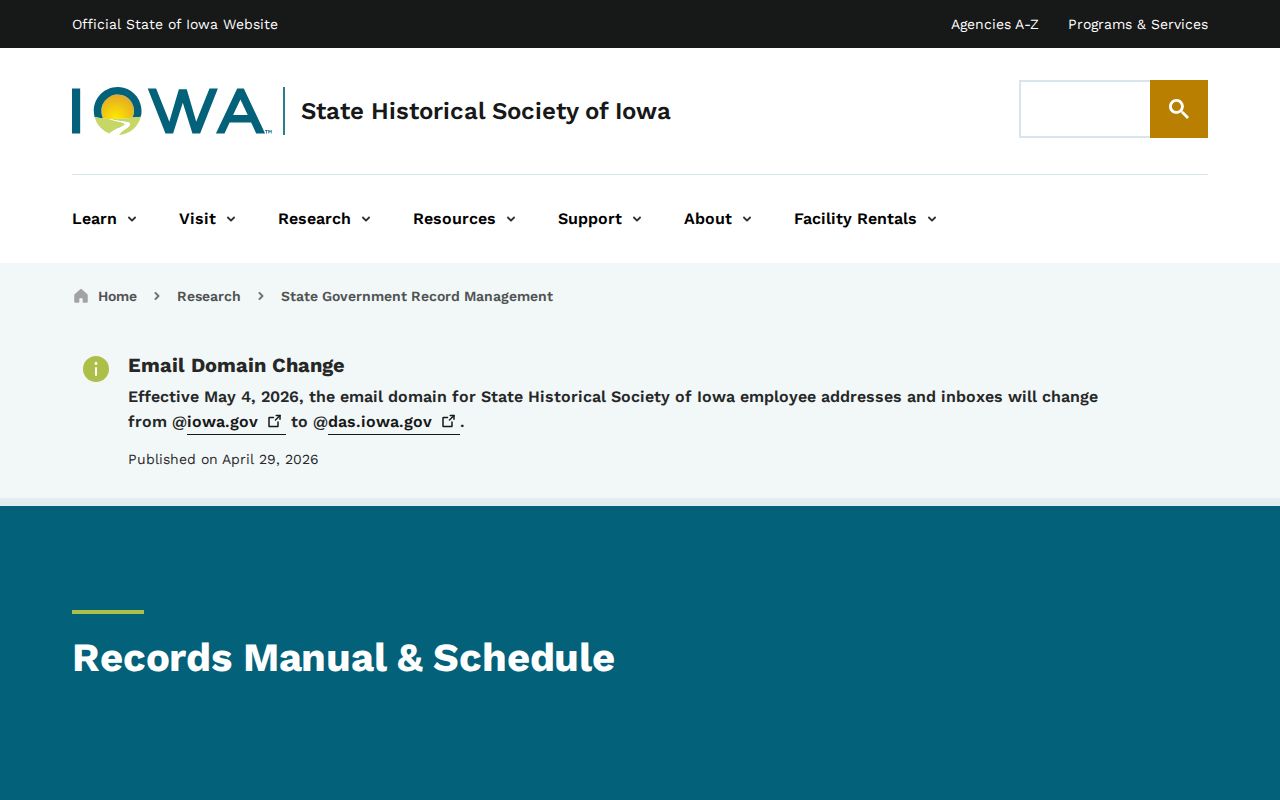
The state guidance supplies a records-management framework, not a published Clarke Sheriff retention promise.
Clarke Courts and Archives
Different rules govern what a court keeps and what the public can reach. Iowa Courts Online is the first stop for case files. From there, the Clarke County Clerk of Court can clear up anything confusing in a public case. News stories fade. Case indexes tend to last. An expungement order can seal the court file, though other copies held elsewhere survive on their own terms.
Once a person enters state custody, the Iowa Department of Corrections applies its own policies to those records. Federal and immigration systems operate separately too. An archive is not a shortcut to a current Clarke County mugshot. Old booking images are rarely searchable by name. They are rarely posted online.
Clarke Reports Require Context
Bond terms address release conditions only. A transport statement shows what the report said at that moment, not where the person sits today. Treat each line as a snapshot of one point in time.
Check the court record itself before describing any case outcome.
Label every note with its source, the event date, the publication date, the agency named, and any custody qualifier. That habit keeps a periodic police report from being mistaken for a live Clarke County arrest log. Context is the guardrail.